

Suramin is a drug that scientists studied because it can directly turn off the cell danger response right at the cellular level.
It works by telling individual cells to stop acting like they’re under attack—so they can start to relax and heal properly.
That’s why it showed so much promise in research for autism. And would work similarly for PANS.
The tricky part is suramin isn’t something families can get right now, so it’s more like a powerful example of what’s possible on that deep cellular front.
In part 1 we focused on supplement / peptide replacements to calm the cell danger response.
Read the part 1 post here:
Suramin Without Suramin: Calming the Cell Danger Response in Autism
•••
Now, in part two we switch our focus to another effective method, nervous system calming.
It works differently but just as importantly. Instead of diving straight inside the cells, it helps quiet the brain and the nervous system, which is the control tower of the whole body’s stress alarm.
When the nervous system gets truly calm and signals it’s safe, it helps switch off that cell danger response more broadly.
It’s the body’s way of hearing, “Okay, we’re safe now, you can relax.”
If you imagine suramin as someone cutting the cords on the cell’s alarm system directly, nervous system calming is like turning down the volume on the main speaker in the brain that tells all the cells what to do.
Both ways aim to stop that stuck-on danger state, but calming the nervous system is more accessible and something parents can work on every day.
If a child’s nervous system can get deeply calm and safe, in many cases that can make a huge difference—sometimes as strong as or even better than what Suramin promises.
That’s why focusing on calm as part of healing isn’t just nice to do, it’s essential.
It sets the stage for peptides and other tools to do their best work without the body feeling like it still needs to stay in fight-or-flight mode.
How calming the nervous system helps switch off the cell danger response
Main idea: the danger response gets loud when the brain’s alarm centers (amygdala/brainstem) sense threat.
Safety cues increase vagal tone, shift the body from sympathetic “go” to parasympathetic “rest-repair,” lower adrenaline and cortisol, and quiet inflammatory signaling.
When the control tower calms, cells stop broadcasting “danger” and return to repair.
That’s why these simple practices can change behavior, gut, and sleep—fast enough to feel, gentle enough to repeat.
Examples that work (and why)
Bee buzzing
How: lips closed, slow exhale with a soft buzz/hum, 5–7 times. Fingers can rest lightly on cheeks or near ears to feel vibration.
Why it works: lengthens the exhale and vibrates areas innervated by the vagus nerve.
- Longer exhales increase parasympathetic tone, lower heart rate, and dampen the startle reflex.
- The vibration adds a “mechanical” safety signal that tells the midbrain it’s okay to stand down.
Butterfly taps (bilateral rhythm)
How: arms crossed over chest, alternate left–right taps slowly for 30–60 seconds.
Why it works: repetitive left-right stimulation helps the brain integrate sensory input, easing hyperarousal.
- Slow, predictable rhythm acts like a metronome for the autonomic nervous system, shifting it toward regulation and lowering limbic reactivity.
5–4–3–2–1 orienting (present-moment anchor)
How: name 5 things you see, 4 you feel, 3 you hear, 2 you smell, 1 you taste. If language is tough, just point and count.
Why it works: orienting pulls attention out of threat simulation into real-time sensory data.
- This reduces amygdala-driven prediction loops and increases prefrontal control.
- The brain gets proof of safety from the environment.
Progressive “melt” relax (muscle-to-nerve reset)
How: “Squeeze toes for five… then melt.” Move to calves, hands, face. Two to three areas is enough for younger kids.
Why it works: brief tension followed by release activates Golgi tendon organs and resets baseline muscle tone.
- The nervous system reads the “melt” as safety, reducing sympathetic output, easing pain, and preparing the body for sleep.
Body Co-regulation (child / parent)
How: sit lower than your child, soften eyes, gentle smile, lengthen your exhale, slow movements, keep voice low and steady.
Why it works: children mirror caregiver state through nonverbal cues.
- Your slower breathing and softened gaze are direct safety inputs that raise their vagal tone.
- Co-regulation often works when words fail because the body trusts bodies first.
Safe touch anchor (if welcomed)
How: warm palm on upper back or your own heart if touch isn’t welcome; pair with one slow phrase: “You’re safe with me.”
Why it works: gentle, sustained pressure activates pressure receptors that calm the sympathetic system.
- Touch plus a single, predictable phrase tightens the safety association without adding cognitive load.
Nature minute (sky gaze)
How: step outside and look at the sky for 60 seconds; add bare feet on grass or a tree touch if available.
Why it works: widening the visual field reduces foveal threat scanning and tells the midbrain “no immediate danger.”
- Natural light also nudges circadian rhythm and mood networks toward balance, making calm easier to hold.
Sensory funnel (reduce noise, add one regulator)
How: dim lights, lower voices, clear visual clutter; offer one regulating input like gentle rocking, light weight, or soft hum.
Why it works: too many inputs keep the thalamus and cortex on high duty.
- Lowering inputs frees capacity for regulation. One strong, predictable input gives the nervous system a clear cue to organize around.
Worry-time container (delayed processing)
How: acknowledge the worry, schedule a 5‑minute “worry time” later, write it on a sticky note, and place it in a jar.
Why it works: containment lowers limbic urgency and engages prefrontal planning.
- The brain feels heard without needing to solve in the red zone, which reduces looping and keeps arousal from spilling over.
Catch, Cancel, Calm (pattern interrupt) *a re-wiring favorite!
How: notice feelings of anxiety /worry / panic
Say “Cancel,” then do one body cue for 60–120 seconds.
Why it works: naming engages the prefrontal cortex; “Cancel” breaks the reflex arc; the body cue shifts physiology.
- This top-down plus bottom-up combo is potent for moving out of alarm quickly.
- It also teaches the brain a new sequence: awareness, choice, then regulation, which builds a faster pathway back to safety over time.
- Consistency matters here—the same words and same cue become a safety shorthand, rewiring the nervous system path to recognize and respond to next time.
When to use these
Before transitions, meals, school, after exposures, and bedtime.
If pupils are wide, breath is shallow, or rigidity is up, do a body cue first and keep words minimal.
A calmer nervous system makes peptides and tools from part 1 work notably better.
It reduces background sympathetic drive and inflammatory signaling, so inputs land.
Simple two-week practice
Week 1: pick two techniques (for example humming and butterfly taps) and do them twice daily at the same times.
Week 2: keep those, add your long exhale as a silent co-regulation cue, and lower lights after dinner.
On rough days, step outside for sky time first, then try one cue.
Language that keeps it safe “Your body is learning calm.” “Pause, then we melt.” “You’re safe with me.”
If you’re seeing even small wins: smoother transitions, fight or flight, that’s the cell danger response turning down and regulation holding longer between bumps.
Keep going, add or subtract one tool at a time, and see your whole family’s nervous systems feel safer.
Together, we’ve got this!
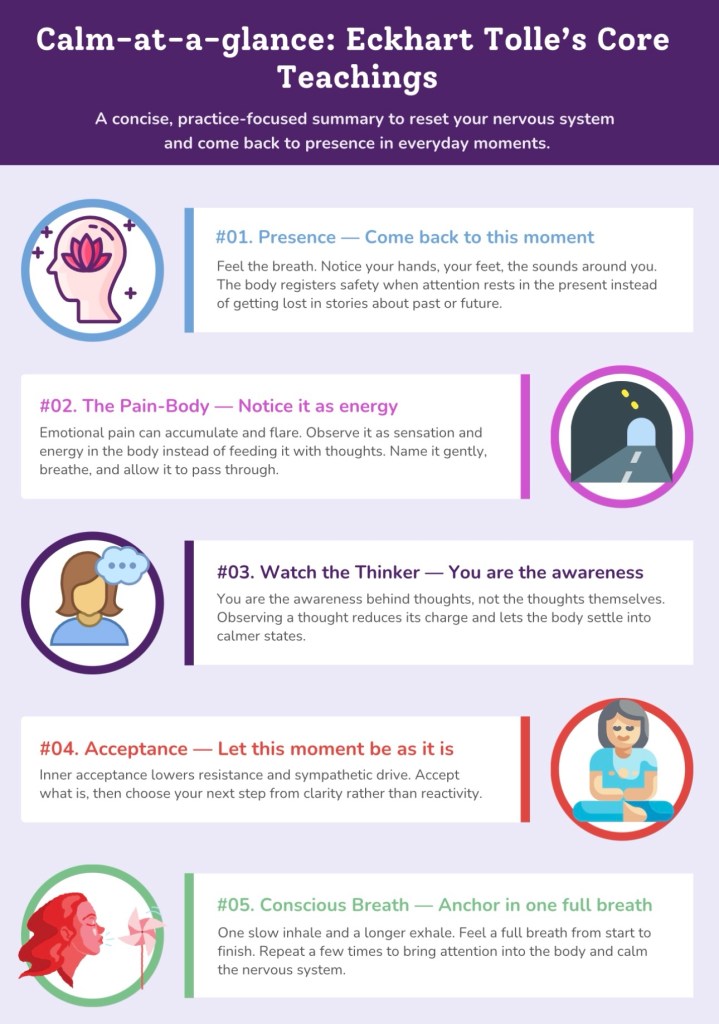
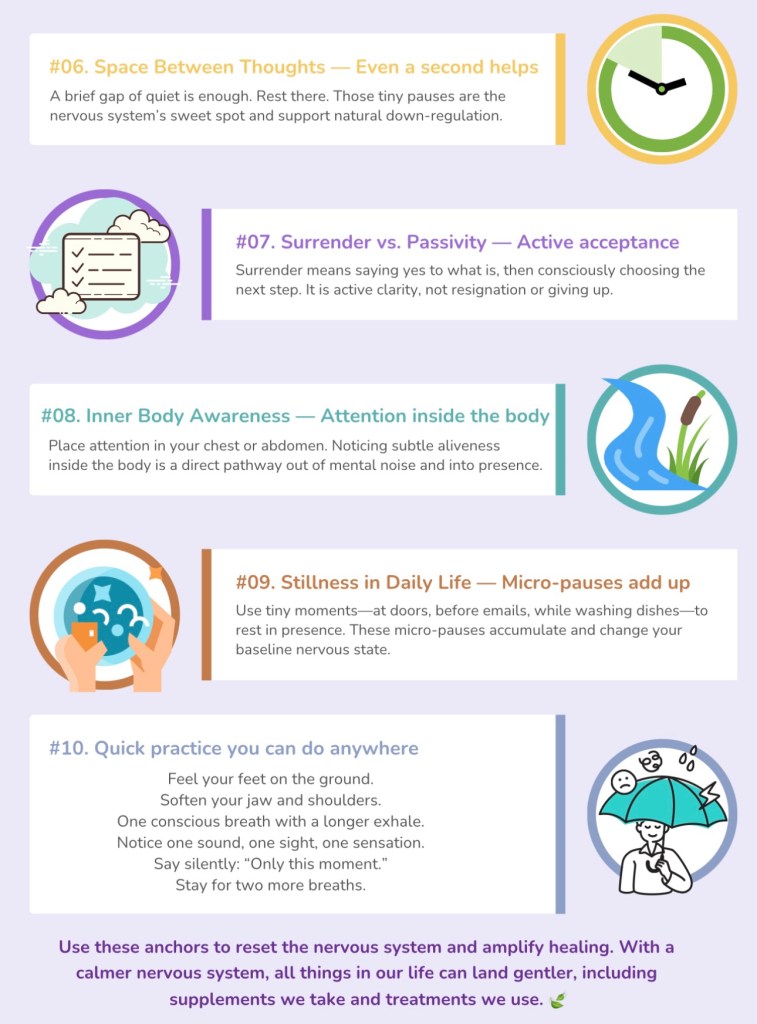
And get our infographic, to find your own calm.
View in high-res here: https://infograph.venngage.com/ps/xa0zud95Mu0
Return to part 1: Suramin without the Suramin
For personalized help
You can consult with our digital mind tool. She can guide you through making the best choices and ease the learning curve for peptides and all other supports for our children.
For other pages
See Contents:
- Start Here
- Treating Kids & Family
- Diagnosis & Symptoms
- Environment & Lifestyle
- Nutritional Foundations
- Supplements
- Peptides & Bioregulators
- Supporting Detox
- Help with healing (24/7)
- Posts
 nest biomed